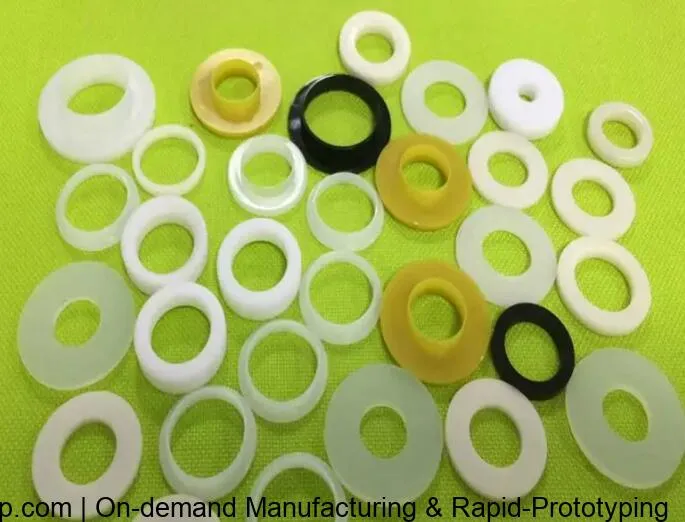
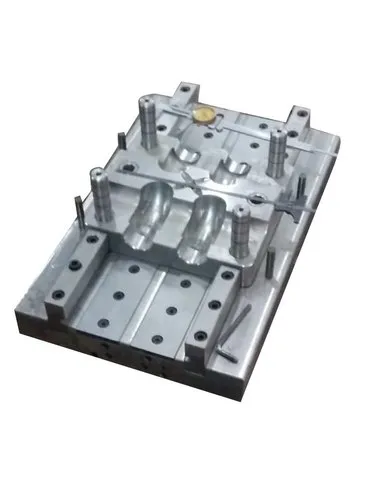
Ultraviolet (UV) radiation from sunlight can degrade plastics over time, leading to discoloration, loss of mechanical properties, brittleness, and surface cracking. For applications where products are exposed to outdoor conditions, UV-resistant plastics are essential. Injection molding, a common manufacturing process for mass-producing plastic parts, often relies on these specialized materials to ensure product longevity and performance.
Why UV Resistance Matters in Plastics
Plastics exposed to UV light undergo photodegradation, a chemical process where UV photons break down polymer chains. This leads to:
Fading or yellowing of color
Loss of tensile strength
Cracking or embrittlement
Surface chalking
Industries such as automotive, construction, agriculture, and outdoor consumer products frequently demand UV-stable plastic components to maintain performance and aesthetic appeal.
Common UV-Resistant Plastics Used in Injection Molding
Polycarbonate (PC)
Strengths: High impact resistance, transparency, and good heat resistance.
UV Resistance: Often requires UV stabilizers or coatings to enhance longevity.
Applications: Outdoor lighting, roofing sheets, optical lenses.
Acrylonitrile Butadiene Styrene (ABS) – UV-Modified Grades
Strengths: Good mechanical properties, affordable.
UV Resistance: Standard ABS is not UV-stable, but UV-modified or ASA (Acrylonitrile Styrene Acrylate) is developed for outdoor use.
Applications: Automotive parts, outdoor enclosures.
ASA (Acrylonitrile Styrene Acrylate)
Strengths: Excellent weatherability, good impact resistance, and color retention.
UV Resistance: Inherently UV-resistant without additional additives.
Applications: Automotive exterior components, garden furniture, roofing.
Polyethylene (PE) and Polypropylene (PP) – UV-Stabilized Grades
Strengths: Lightweight, chemical-resistant.
UV Resistance: Typically requires the addition of UV stabilizers (like HALS or carbon black).
Applications: Agricultural products, outdoor containers, piping.
Nylon (Polyamide) – UV-Modified
Strengths: High strength, thermal resistance.
UV Resistance: Poor in standard form, but improved with UV stabilizers.
Applications: Automotive engine components, outdoor mechanical parts.
Polyvinyl Chloride (PVC) – Rigid Form
Strengths: Good dimensional stability, flame resistance.
UV Resistance: Requires UV inhibitors for prolonged exposure.
Applications: Window profiles, electrical housings, pipes.
UV Stabilization Techniques
To improve UV resistance, manufacturers can use:
Additives such as:
UV Absorbers: Absorb UV radiation and convert it into harmless heat (e.g., benzophenones, benzotriazoles).
Hindered Amine Light Stabilizers (HALS): Scavenge free radicals generated by UV exposure.
Antioxidants: Prevent oxidation after UV degradation.
Coatings:
UV-resistant paints or clear coatings can protect the base material.
Pigments and Fillers:
Carbon black is an effective UV-blocker for opaque applications.
Titanium dioxide is often used for light-colored plastics.
Applications and Industries
UV-resistant injection molded plastics are widely used in:
Automotive (exterior trims, mirror housings)
Construction (roof tiles, cladding, window frames)
Consumer Goods (garden tools, patio furniture)
Agriculture (irrigation components, tool housings)
Electronics (outdoor enclosures, solar panel mounts)
Conclusion
Using UV-resistant plastics in injection molding is critical for ensuring the durability and safety of products exposed to sunlight and outdoor conditions. Material selection should consider environmental exposure, mechanical needs, cost, and processing characteristics. By choosing the appropriate UV-stable polymer and stabilization method, manufacturers can significantly extend product life and performance.