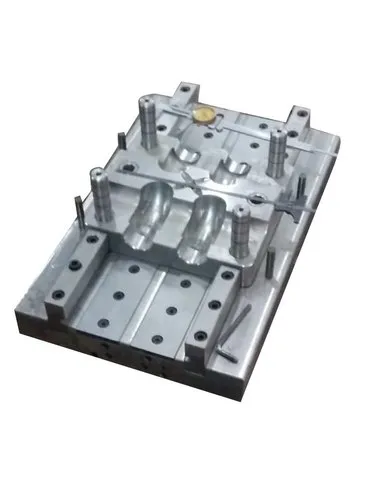
Blow moulding is a manufacturing process used to produce hollow plastic parts, such as bottles and containers, by inflating a heated plastic tube (parison) within a mold cavity. The quality, precision, and efficiency of blow moulded products depend significantly on the design and fabrication of the molds used in the process. This document outlines the key mold fabrication techniques used in blow moulding, along with considerations that influence mold performance and longevity.
1. Mold Design Considerations
Before fabrication, mold design is critical and includes:
Part geometry and size
Type of blow moulding process (Extrusion, Injection, or Stretch blow moulding)
Material flow and cooling behavior
Split lines and ejection mechanism
Ventilation for air escape
CAD (Computer-Aided Design) software is typically used to create precise 3D models of the molds.
2. Common Mold Materials
Molds for blow moulding are generally made from:
Aluminum: Lightweight, good for low to medium production volumes; easy to machine.
Tool Steel: High strength and durability, ideal for high-volume production.
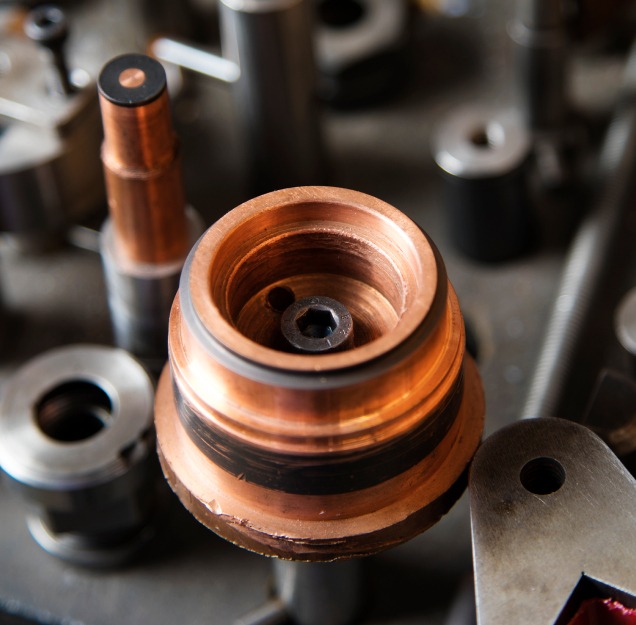
Beryllium-Copper Alloys: Excellent thermal conductivity; often used in insert components.
Material selection depends on required mold life, part complexity, and cooling efficiency.
3. Mold Fabrication Techniques
a. CNC Machining
Process: Computer Numerical Control (CNC) machining is the most common technique, using high-precision tools to cut and shape metal blocks based on CAD designs.
Advantages: High precision, repeatability, and adaptability to complex geometries.
Applications: Used to fabricate mold halves, inserts, and cores.
b. Electrical Discharge Machining (EDM)
Process: Uses electrical sparks to erode material from a mold block, particularly useful for creating intricate shapes and tight corners.
Advantages: Can produce complex internal geometries that are difficult with traditional cutting.
Applications: Fine details, logos, and small cavities.
c. Casting
Process: Molten metal is poured into a mold cavity (usually sand or ceramic) shaped like the final mold part.
Advantages: Cost-effective for producing large or rough mold blocks.
Applications: Often used for rough pre-forms which are later finished using CNC machining.
d. Additive Manufacturing (3D Printing)
Process: Involves building up the mold layer-by-layer using metal or plastic powders.
Advantages: Rapid prototyping, complex internal channels (like conformal cooling).
Applications: Prototype molds, hybrid tooling with integrated cooling.
e. Polishing and Surface Treatment
After fabrication, molds undergo:
Polishing: Improves surface finish for better part appearance.
Texturing: Applied for grip or aesthetic features.
Hardening/Coating: To increase wear resistance and reduce friction.
4. Cooling System Integration
Efficient cooling is vital for reducing cycle times and improving part quality. Cooling channels are:
Drilled or milled directly into the mold body
Conformal, when using additive manufacturing, allowing channels to follow the contour of the mold cavity
Proper design of the cooling system ensures uniform part thickness and dimensional stability.
5. Mold Assembly and Testing
After fabrication:
Mold halves and inserts are assembled and aligned.
Functional tests are conducted to verify air venting, cooling efficiency, and mold fit.
Sample blow moulding trials are performed to validate part dimensions and surface finish.
Conclusion
Mold fabrication is a foundational aspect of the blow moulding process, requiring a balance between precision engineering and practical design. Modern fabrication techniques like CNC machining and EDM provide the necessary accuracy, while additive manufacturing introduces flexibility for complex or prototype tooling. Proper mold fabrication ensures consistent product quality, longer mold life, and higher production efficiency.