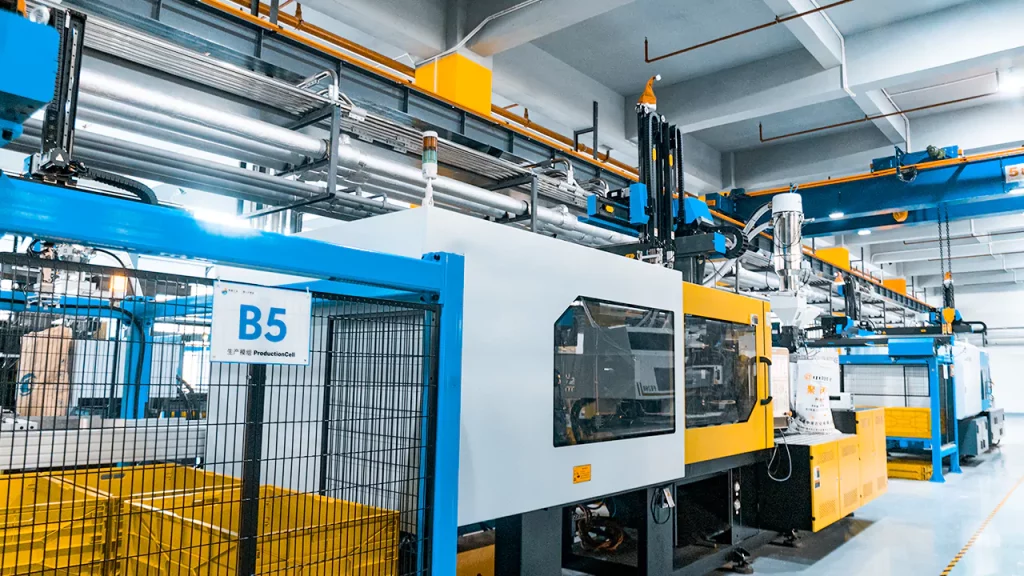
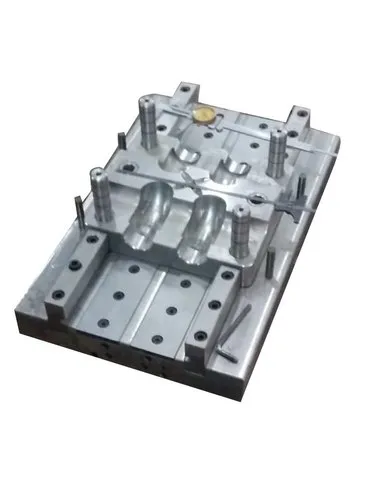
The integration of Artificial Intelligence (AI) and Machine Learning (ML) into manufacturing processes has brought transformative changes across industries. In mould development, which plays a critical role in the production of plastic, metal, and composite parts, AI and ML are being increasingly leveraged to improve efficiency, reduce costs, and enhance product quality.
Applications of AI and ML in Mould Development
Design Optimization
AI algorithms can analyze vast datasets from previous mould designs and suggest optimized geometries that enhance performance and reduce material usage.
Generative design tools use ML to iterate on thousands of design permutations based on given constraints like strength, weight, and manufacturability.
Predictive Maintenance
ML models monitor mould condition and usage data to predict potential failures before they occur.
This minimizes downtime, extends the lifespan of moulds, and ensures uninterrupted production.
Process Parameter Optimization
AI systems can automatically adjust parameters such as temperature, pressure, and injection speed in real time to improve moulding outcomes.
ML algorithms learn from historical process data to determine the optimal settings for different materials and part designs.
Defect Detection and Quality Control
Computer vision systems powered by AI can detect surface and structural defects in moulded parts with high accuracy.
ML can identify root causes of defects by correlating production parameters with quality inspection data.
Material Selection and Performance Prediction
AI tools can recommend the best material for a specific moulding application by analyzing mechanical properties, cost, and environmental impact.
ML models can simulate material behavior under different moulding conditions, reducing the need for physical prototyping.
Cycle Time Reduction
AI-driven systems analyze cycle times and suggest improvements to reduce waste and increase productivity without compromising quality.
Benefits of AI and ML in Mould Development
Increased Efficiency: Faster design iterations and reduced development time.
Cost Reduction: Fewer defects, optimized material usage, and predictive maintenance lower overall production costs.
Higher Product Quality: Improved process control and real-time monitoring enhance consistency and precision.
Data-Driven Decision Making: Historical and real-time data guide better decisions throughout the mould lifecycle.
Customization and Flexibility: AI enables adaptive manufacturing, allowing for faster transitions between different moulds or product lines.
Challenges and Considerations
Data Availability and Quality: Successful AI/ML implementation requires high-quality, structured data, which may not always be readily available in traditional moulding setups.
Integration with Legacy Systems: Many mould development environments rely on older machinery that may not be compatible with modern AI technologies.
Skill Gaps: There’s a need for engineers who understand both moulding processes and AI/ML technologies.
Initial Investment: High upfront costs for AI infrastructure and training can be a barrier, especially for small and medium enterprises.
Future Outlook
As technologies continue to evolve, AI and ML are expected to become standard in mould development, driving:
Autonomous mould design systems.
Real-time adaptive moulding processes.
End-to-end digital twins of the mould lifecycle.
AI-driven sustainability metrics to minimize environmental impact.
The continued convergence of AI, IoT, and advanced materials will redefine the possibilities in mould development, pushing the boundaries of innovation and operational excellence.
Conclusion
AI and Machine Learning are no longer futuristic concepts in mould development—they are current drivers of smarter, faster, and more reliable manufacturing. Companies that embrace these technologies early will gain a competitive edge by improving quality, reducing costs, and accelerating time to market.