Compression moulding is a widely used manufacturing process for shaping thermosetting materials like melamine. Melamine moulding compounds (MMC) are ideal for producing durable, heat-resistant, and aesthetically pleasing household and industrial products such as plates, trays, electrical components, and kitchenware. The quality and efficiency of the final melamine product heavily depend on the design and precision of the compression moulding dies.
What is a Compression Moulding Die?
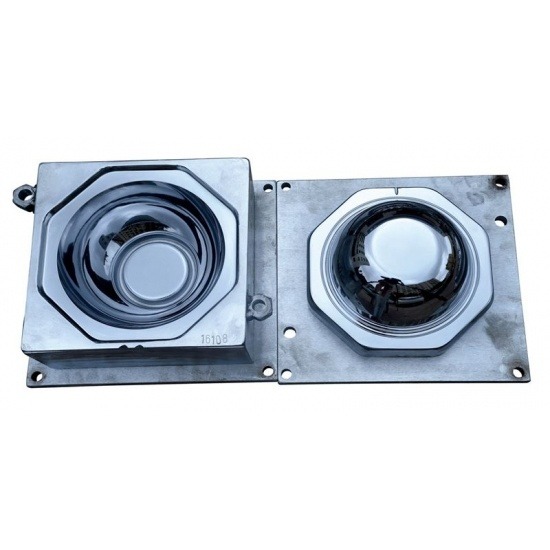
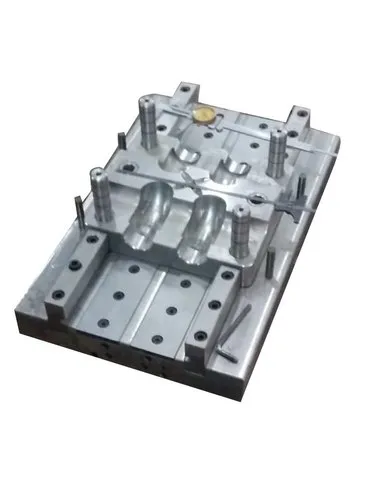
A compression moulding die is a specialized tool used in the compression moulding process to shape raw melamine compound into the desired product form under heat and pressure. The die typically consists of two halves: the male (core) and female (cavity) parts.
Key Features of Melamine Compression Moulding Dies
Material
Dies are usually made from high-grade tool steel (like H13 or P20) that can withstand high temperatures (up to 180°C – 200°C) and pressures.
Surface hardening and polishing ensure smooth ejection and longer die life.
Design Precision
High dimensional accuracy is essential to maintain consistency across batches.
CAD/CAM software is used for designing complex geometries and fine surface textures (e.g., textures that mimic ceramic finishes).
Heating System
Dies are equipped with integrated heating elements or rely on external heating presses to cure melamine under uniform temperature.
Surface Finish
Dies are mirror-polished or textured based on the end-product requirement.
Teflon or chrome coating may be used to improve release properties.
Ejection System
Ejector pins or air ejection systems are often integrated to facilitate easy and damage-free removal of finished parts.
Applications of Melamine Moulding Dies
Compression moulding dies are used to manufacture a wide variety of melamine-based products, including:
Dinnerware: Plates, bowls, cups, and serving trays
Electrical components: Switchgear parts, plug tops, and sockets
Kitchen accessories: Spoons, ladles, and mixing bowls
Hotelware and institutional tableware
Process Flow Using Melamine Moulding Dies
Preheating (Optional)
Melamine compound may be preheated to soften before moulding.
Material Loading
Precise quantity of melamine compound is placed in the die cavity.
Compression and Heating
The die is closed under high pressure (typically 2–4 MPa) and heated (150–180°C) for a specific curing time.
Curing
Heat and pressure initiate cross-linking of the melamine resin, giving it a hard and rigid structure.
Ejection and Finishing
Finished product is ejected and may undergo trimming or surface polishing.
Advantages of High-Quality Moulding Dies
Enhanced product consistency and dimensional accuracy
Improved cycle time and production efficiency
Reduced wear and tear, ensuring longer die life
Lower rejection rates due to better surface finish and defect control
Customization and Design Services
Most die manufacturers offer custom-designed dies tailored to specific product dimensions, shapes, and textures. Design capabilities often include:
3D modeling and simulation
Mold flow analysis
Prototyping services
Conclusion
Compression moulding dies are the backbone of melamine product manufacturing. Investing in high-quality, precision-engineered dies ensures superior product quality, faster production cycles, and long-term cost savings. Whether for mass production of tableware or custom-designed industrial components, the right die makes all the difference.