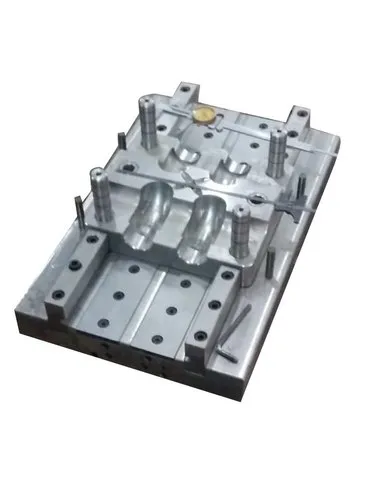
Automation has transformed the mould manufacturing industry by introducing higher precision, faster production cycles, reduced labour dependency, and improved consistency. From CNC machining to robotic handling and smart inspection systems, automation ensures that moulds are produced with minimal errors and at optimum efficiency.
1. Role of Automation in Mould Manufacturing
Automation streamlines and accelerates each stage of mould production. It integrates multiple technologies to eliminate repetitive manual tasks, enhance accuracy, and maintain uniform quality. Advanced systems also enable 24/7 production, reducing delivery times and increasing competitiveness in global markets.
2. Key Automated Technologies in Mould Manufacturing
a. CNC Machining Automation
Computer Numerical Control (CNC) machines are central to automating mould manufacturing.
They offer:
High precision in milling, drilling, and contouring
Automated tool changing and multi-axis operations
Reduced setup time and human error
Consistent repeatability across batches
Multi-axis CNC automation (3-axis, 4-axis, 5-axis) ensures complex mould cavities are machined with superior accuracy.
b. Robotic Arms and Handling Systems
Robots support automation by performing tasks such as:
Loading and unloading workpieces
Transferring mould components between machining stations
Polishing and deburring operations
Assembly and disassembly of mould parts
Robotic integration significantly enhances efficiency and reduces cycle time.
c. CAD/CAM Integration
Computer-Aided Design (CAD) and Computer-Aided Manufacturing (CAM) systems automate:
Mould design
Tool path programming
Simulation of machining operations
Automated CAD/CAM integration helps detect design errors beforehand, improving machining accuracy and reducing rework.
d. Automated EDM (Electrical Discharge Machining)
Modern EDM machines feature:
Automated electrode changers
Intelligent spark control
Real-time parameter adjustments
These allow unattended operations and improved detail accuracy, especially in deep cavities and fine features.
e. Smart Inspection & Quality Automation
Automated inspection systems include:
Coordinate Measuring Machines (CMM)
Laser scanning and 3D metrology
Vision-based inspection systems
Automation ensures that moulds meet strict tolerances and dimensional accuracy without human intervention.
f. Industrial IoT & Real-Time Monitoring
IoT-enabled mould manufacturing setups benefit from:
Machine status monitoring
Predictive maintenance
Data-driven process optimization
Sensors collect operational data that helps minimize downtime and ensure smooth workflows.
3. Advantages of Automation in Mould Manufacturing
Increased productivity through faster and streamlined operations
Higher precision and tighter tolerances
Reduced labour costs and dependency
Lower error rate and minimal rework
Improved safety by reducing manual handling of heavy components
Scalability for high-demand production
Consistent quality across all moulds
4. Applications of Automation Across Industries
Automated mould manufacturing is widely used in:
Automotive
Electronics
Medical devices
Household products
Packaging
Industrial machinery
Each sector demands high precision and repeatability, which automation provides effectively.
5. Future Trends in Mould Manufacturing Automation
AI-driven machining optimization
Fully automated production cells with robots, CNC machines, and CMMs working together
Digital twins for virtual mould development
Adaptive machining with real-time control
Increased use of collaborative robots (cobots)
These advancements will make mould manufacturing even faster, smarter, and more cost-efficient.