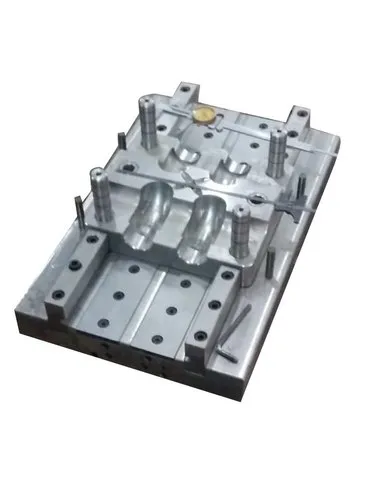
In the field of plastic injection molding, creating parts with undercuts, internal threads, or complex internal geometries poses significant challenges. Traditional fixed-core molds often cannot release such parts without damaging them. Collapsible core moulds offer an innovative solution by allowing the molding of intricate features without requiring secondary operations or complex side actions.
What are Collapsible Core Moulds?
A collapsible core is a mechanical molding component designed to form internal undercuts or complex internal features in molded parts. After the molding process, the collapsible core contracts inward, reducing its diameter and allowing the part to be ejected without interference from the internal geometry.
Key Features
Segmented Construction: Typically made of several steel segments arranged around a central pin or hub.
Collapsing Mechanism: After molding, the segments retract or fold inward, either mechanically or hydraulically.
High Precision: Capable of maintaining tight tolerances even on intricate internal features.
Reusable and Durable: Designed for high-volume production with minimal wear and tear.
Applications
Collapsible core molds are commonly used in industries such as:
Automotive: Air ducts, connectors, and fluid system components
Consumer Electronics: Housings with snap-fit features or internal guides
Medical Devices: Precision components with internal threads or grooves
Packaging: Caps and closures with screw threads or tamper-evident features
Advantages
Eliminates Need for Side Actions: Simplifies mold design and reduces cycle time.
Supports Complex Geometry: Enables molding of parts that would otherwise require multi-part assemblies.
Improves Part Quality: Ensures consistent molding of intricate features.
Reduces Post-Molding Operations: Eliminates need for secondary machining or assembly.
Design Considerations
Material Selection: Core materials must withstand repeated thermal cycling and high pressure.
Maintenance Access: Proper design allows easy removal and cleaning of collapsible cores.
Cooling Requirements: Adequate cooling must be integrated to maintain cycle efficiency.
Part Geometry Limitations: While versatile, collapsible cores are best suited for symmetrical or near-symmetrical internal features.
Limitations
Higher Initial Cost: More complex design and manufacturing than standard cores.
Size Constraints: Less suitable for very large or asymmetrical internal features.
Tool Wear: Moving parts are subject to wear and may require regular maintenance.
Conclusion
Collapsible core moulds offer a highly effective solution for molding complex internal geometries in a single operation. While they come with higher upfront costs and design complexity, their ability to streamline production and improve part functionality makes them a valuable tool in modern injection molding, especially for high-precision and high-volume applications.