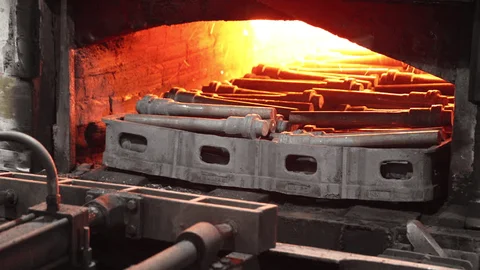
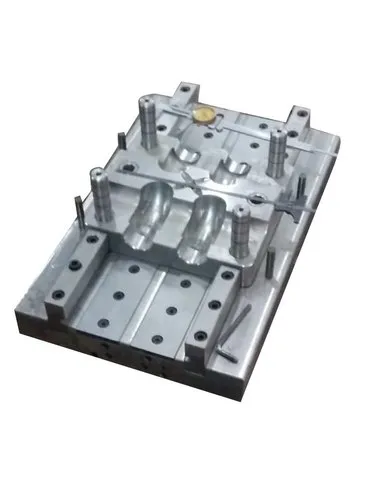
Heat treatment is a critical process in enhancing the performance and service life of die materials used in various manufacturing industries, particularly in metal forming, die casting, forging, and plastic molding. The primary goal of heat treatment is to optimize the mechanical properties of the die material—such as hardness, toughness, wear resistance, and thermal fatigue resistance—thereby improving its durability and reducing downtime due to die failure.
1. Importance of Heat Treatment in Die Materials
Dies are subjected to extreme working conditions, including:
High temperatures
Cyclic thermal loading
Mechanical stresses
Abrasive and erosive wear
Without proper heat treatment, die materials are prone to premature failure modes like cracking, softening, wear, and thermal fatigue. An appropriate heat treatment strategy tailors the material’s microstructure to withstand these conditions, ensuring longer operational life and better dimensional stability.
2. Common Die Materials and Heat Treatment Methods
| Material Type | Typical Use | Heat Treatment |
|---|---|---|
| H13 (Hot Work Steel) | Die casting, forging | Preheating → Hardening → Tempering |
| D2 (Cold Work Steel) | Blanking, forming dies | Annealing → Hardening → Tempering |
| AISI P20 (Tool Steel) | Plastic molds | Pre-hardening or through-hardening |
| Tungsten Carbide | High wear applications | Sintering, not traditional heat treating |
| High-Speed Steels (e.g., M2) | Punches, cutting tools | Austenitizing → Quenching → Tempering |