1. Introduction
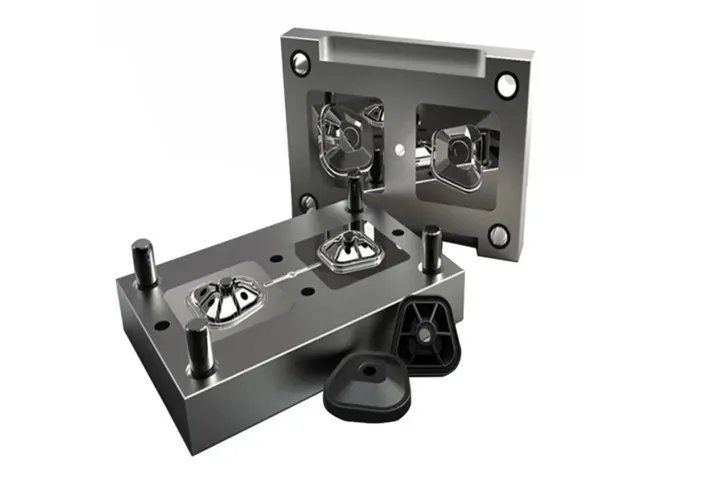
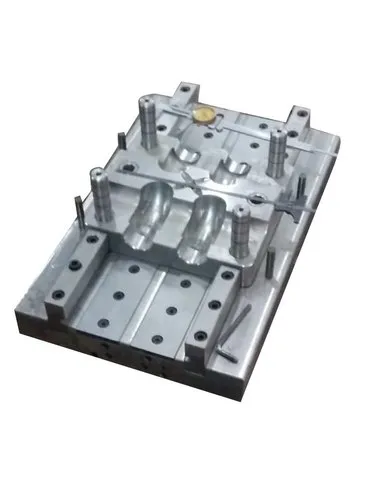
Injection moulding is a widely used manufacturing process for producing plastic parts by injecting molten material into a mould. A critical component of the injection moulding system is the mould base, which serves as the foundation of the mould assembly. It supports and houses various mould components like cavities, cores, guide elements, and ejection systems.
The design of the injection mould base significantly influences the precision, durability, and efficiency of the moulding process.
2. Functions of the Mould Base
Structural Support: Provides a rigid framework to hold and align all mould components.
Cavity and Core Housing: Holds the cavity and core inserts in place for forming the part shape.
Guide Mechanism: Ensures precise alignment between the two halves of the mould (core and cavity side).
Cooling System Integration: Facilitates the inclusion of channels for cooling water to maintain cycle time and dimensional accuracy.
Ejection System Support: Accommodates mechanisms for ejecting the finished part from the mould.
Locating and Mounting: Allows easy mounting onto the injection moulding machine and ensures repeatable positioning.
3. Basic Components of a Mould Base
A typical injection mould base includes the following plates and components:
| Component | Function |
|---|---|
| Top Clamping Plate | Used to mount the mould on the machine’s stationary platen |
| Cavity Plate (A Plate) | Holds the cavity insert |
| Core Plate (B Plate) | Holds the core insert |
| Support Plate | Provides support for core inserts and ejection system |
| Bottom Clamping Plate | Mounted on the movable platen of the machine |
| Guide Pins and Bushes | Align the two halves of the mould during closing |
| Ejector Plate | Supports the ejector pins used to push out the moulded part |
| Return Pins | Return the ejector plate to its original position after ejection |
| Spacer Blocks | Create space for the ejection system |
| Cooling Channels | Maintain desired temperature of the mould |