Introduction
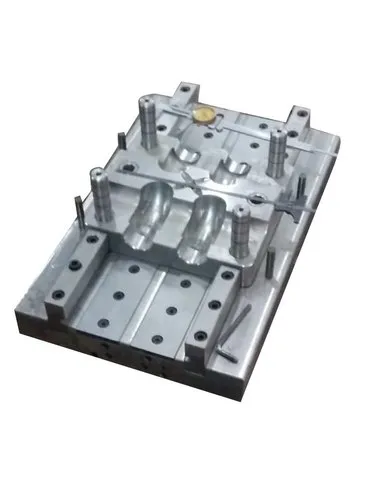
Mold base design is a fundamental aspect of injection mold tooling, especially when manufacturing high-precision plastic parts. High-precision components are commonly used in industries such as medical devices, automotive, aerospace, consumer electronics, and optics, where dimensional accuracy, tight tolerances, and surface finish are critical. The mold base is the backbone that supports all functional elements of the mold, including cavities, cores, ejector systems, and cooling channels.
Designing a mold base for high-precision applications requires meticulous planning, advanced engineering, and strict adherence to tolerances to ensure consistency, repeatability, and product quality.
Key Design Considerations
1. Material Selection
Tool Steel (e.g., P20, H13, S136) is commonly used due to its hardness, durability, and thermal conductivity.
For high-precision molds, pre-hardened or hardened tool steels are preferred to reduce dimensional changes during machining and thermal cycling.
Corrosion-resistant materials (e.g., Stainless Steel) are used when molding corrosive or transparent resins.
2. Dimensional Accuracy and Tolerances
High-precision parts often demand tolerances in the range of ±0.005 mm or better.
The mold base must be machined with tight tolerances, and components such as guide pins, bushings, and alignment locks must ensure perfect repeatability.
CNC machining and EDM (Electrical Discharge Machining) are often used to achieve precision.
3. Thermal Management
Consistent thermal control is critical to prevent warpage and maintain part dimensions.
Efficient cooling channels should be integrated into the mold base design, ensuring uniform heat dissipation.
Use of conformal cooling via additive manufacturing can further enhance temperature control for complex geometries.
4. Alignment and Repeatability
Accurate alignment between cavity and core is crucial.
Use of precision ground guide pins and bushings, and interlocking features (e.g., tapered locks or side locks), improves alignment.
Ejection systems must also maintain alignment to avoid part damage.
5. Rigidity and Stability
The mold base must be rigid enough to withstand high injection pressures (often >1000 bar).
Plate thicknesses and support pillars must be designed to prevent deflection or deformation during the molding cycle.
6. Ejection System Design
Ejection must be smooth and uniform to prevent part distortion.
Ejector pins, sleeves, or lifters must be accurately positioned and operated.
For delicate or small parts, air ejection or stripper plates might be required.
7. Parting Line and Venting
The parting line must be machined with extreme precision to avoid flash.
Micro-venting channels are critical to avoid trapped gases, especially in thin-wall or micro-molding applications.
8. Modularity and Maintenance
A modular mold base allows for easy maintenance and part replacement without reworking the entire tool.
Use of standardized mold base systems (e.g., DME, HASCO) can reduce lead times and cost.
Advanced Technologies in High-Precision Mold Base Design
CAD/CAM Integration: 3D modeling allows simulation of thermal flow, cooling efficiency, and stress points.
Mold Flow Analysis: Predicts material behavior, helping optimize gate location, wall thickness, and cooling layout.
Additive Manufacturing: Enables creation of conformal cooling channels and custom components.
High-Speed Machining: Ensures tighter tolerances and better surface finishes.
Common Challenges
| Challenge | Mitigation Strategy |
|---|---|
| Warpage due to uneven cooling | Uniform and optimized cooling system design |
| Misalignment during molding | Precision guide systems and robust interlocks |
| Flashing at parting line | Ultra-precise machining and sealing |
| Short mold life | Use of high-grade materials and preventive maintenance |