1. Introduction
Injection molding is a critical manufacturing process in the automotive industry, used to produce high-precision plastic parts such as dashboards, bumpers, housings, and interior components. The integration of smart sensors into injection molding machines has transformed this process, enabling enhanced control, efficiency, and quality assurance.
2. What Are Smart Sensors?
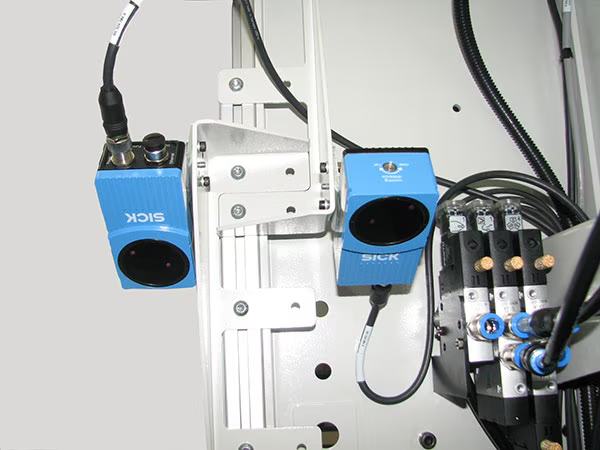
Smart sensors are advanced devices that combine sensing capabilities with embedded processing and communication functions. Unlike traditional sensors, smart sensors can process data, perform diagnostics, and communicate in real-time, often through Industry 4.0 or IoT platforms.
Key features:
Real-time monitoring and feedback
Built-in data analytics
Communication via industrial protocols (e.g., OPC-UA, MQTT)
Self-calibration and diagnostics
3. Role of Smart Sensors in Injection Molding
3.1. Process Monitoring
Smart sensors monitor critical parameters in real-time, such as:
Mold cavity pressure
Melt temperature
Clamping force
Injection speed and flow rate
Cooling time and temperature
These data help in detecting anomalies, optimizing parameters, and maintaining consistent part quality.
3.2. Predictive Maintenance
By continuously tracking machine health indicators (vibration, temperature, wear), smart sensors can predict component failure and schedule maintenance before a breakdown occurs, reducing downtime and costs.
3.3. Quality Assurance
Smart sensors enable closed-loop control by automatically adjusting parameters during the cycle to compensate for material or environmental variations. This ensures each molded part meets exacting standards, critical for safety and performance in automotive applications.
3.4. Energy Efficiency
Sensors track and analyze energy consumption at various stages. This data can be used to optimize machine operation and reduce energy usage — a key metric in sustainable automotive manufacturing.
4. Types of Smart Sensors Used
| Sensor Type | Function |
|---|---|
| Pressure sensors | Monitor cavity pressure to detect short shots or flash |
| Temperature sensors | Track melt and mold temperature |
| Displacement sensors | Measure mold and screw position |
| Flow sensors | Monitor hydraulic or coolant flow |
| Vibration sensors | Detect wear or imbalance in moving parts |