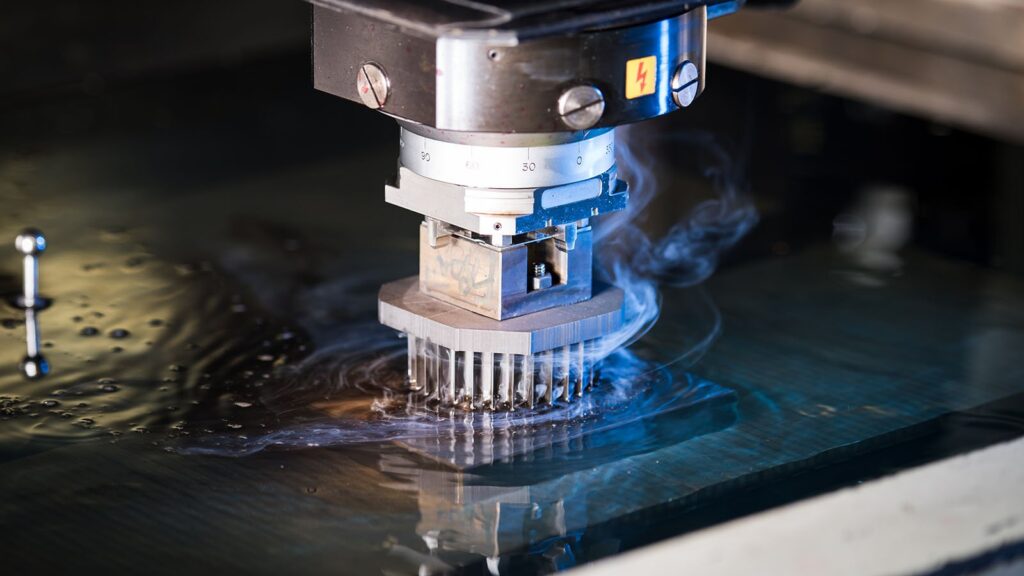
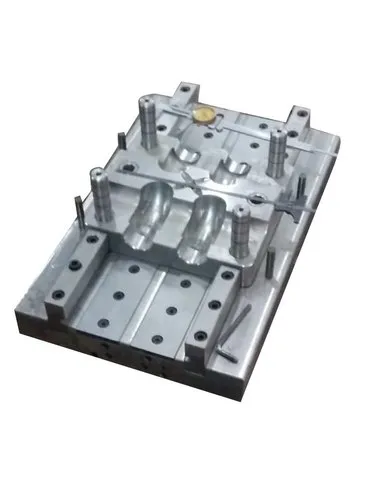
Electrical Discharge Machining (EDM) is a non-traditional machining process that removes material from a workpiece using electrical discharges (sparks). It is particularly valuable in the die-making industry due to its ability to machine complex shapes, hard materials, and intricate features that are difficult or impossible to produce with conventional methods.
Role of EDM in Die Making
Machining Hard Materials
Dies are often made from hard materials like tool steels (e.g., H13, D2, or carbide) to withstand high pressure and repeated use.
EDM can easily machine these hardened materials without the need for post-hardening machining.
High Precision and Intricate Detail
EDM enables the creation of highly precise and intricate geometries, such as sharp internal corners, narrow slots, and deep cavities, which are common in dies for injection molding, forging, or stamping.
This level of precision reduces the need for secondary finishing operations.
Complex Cavity and Profile Generation
In die making, especially for plastic injection molds, EDM is used to create complex 3D cavities that are difficult to machine using traditional milling techniques.
Both sinker EDM and wire EDM are used to achieve the desired cavity shapes and contours.
Tool and Electrode Replication
EDM allows for the use of shaped electrodes (usually made of copper or graphite) to “burn” the inverse of the desired feature into the die.
Multiple identical dies can be produced using the same electrode, ensuring uniformity and consistency.
Types of EDM Used in Die Making
Sinker EDM (Ram EDM)
Commonly used for forming deep cavities and complex shapes.
A custom-shaped electrode is used to erode the material in the die.
Ideal for mold inserts and detailed die components.
Wire EDM
Uses a continuously fed wire (usually brass) to cut through the workpiece.
Ideal for producing precise 2D profiles, punches, and die sections.
Commonly used to cut the die outlines and to create punch and die matching parts.
Advantages of EDM in Die Making
Ability to Machine Hardened Materials: No need for soft machining followed by hardening, saving time and avoiding distortion.
High Dimensional Accuracy and Surface Finish: Reduces the need for post-processing like grinding or polishing.
No Mechanical Force: Since there is no contact between tool and workpiece, delicate features are not subjected to mechanical stress.
Flexibility in Shape: Can produce shapes that are impossible with conventional cutting tools.
Limitations
Slow Material Removal Rate: EDM is generally slower than traditional machining.
Electrode Wear: In sinker EDM, the electrode wears down and may need to be replaced or compensated for.
High Operating Costs: Due to consumables and slower processing times.
Applications in Die Making
Plastic Injection Molds
Used to form detailed cavity shapes, cooling channels, and core pins.
Forging Dies
Used to shape hard dies with fine tolerances and detailed engraving.
Stamping Dies
Wire EDM is used to cut punch and die plates with tight clearances and high accuracy.
Progressive Dies
Complex profiles can be precisely machined, ensuring alignment and consistency across stages.
Conclusion
EDM has revolutionized die making by enabling the manufacturing of complex, high-precision, and hard-material components with excellent surface finishes. Despite its slower speed, its unmatched capability to produce intricate and high-tolerance features makes it indispensable in modern die manufacturing. The use of both sinker and wire EDM has become standard practice, enhancing both the efficiency and quality of dies across industries.